
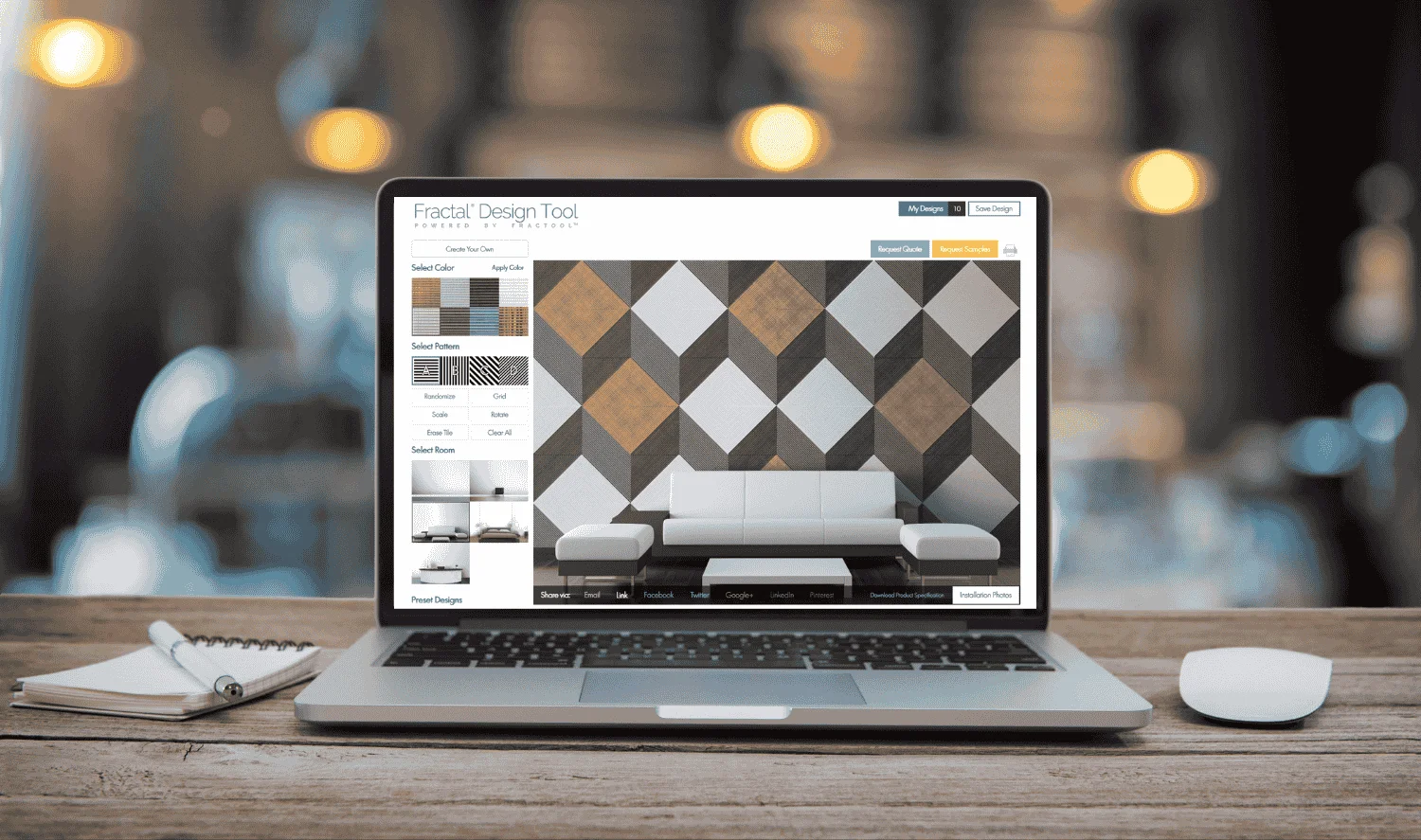
Selling customizable products online is tough because buyers want to see their choices come to life.
That’s why our client, Plyboo, came to us with a bold idea and a challenge: turn their beautifully designed bamboo wall panels into something people could actually interact with online. We’ve been building websites for 25 years, and every now and then, a project comes along that’s more than a feature—it’s something people enjoy using.
The first time we saw Plyboo’s wall products, bamboo panels with intricate line patterns, we were amazed at how design-forward they were.
But Plyboo knew great designs aren’t enough.
They needed a way for architects, designers, and homeowners to interact with the product.
So they asked us to build a tool that would let people mix and match panel styles and colors to create custom wall layouts before ever picking up the phone or ordering a sample.
So, What Exactly Does The New Design Tool Do?
It’s a web-based tool where you can build your own wall design using Plyboo’s real panel styles and color options.
Behind the scenes, this tool is powered by custom JavaScript.
We built it in WordPress with a backend system that lets Plyboo update panels and colors—without touching a single line of code (thanks to tools like Advanced Custom Fields).
On the front end, users drag, drop, rotate, and remix real panel styles—experimenting with designs that feel as satisfying as snapping together physical pieces. The tool can even randomize your design with smart logic that keeps it looking good.
There’s a grid system to help you get the scale right, and everything you place is tallied up below so you know exactly what you’d need to order.
There’s also a login system to save designs and shareable links that preload your saved designs for clients or colleagues to review.
If someone likes what they see, they can request a quote from Plyboo—complete with a materials list—right from the tool.
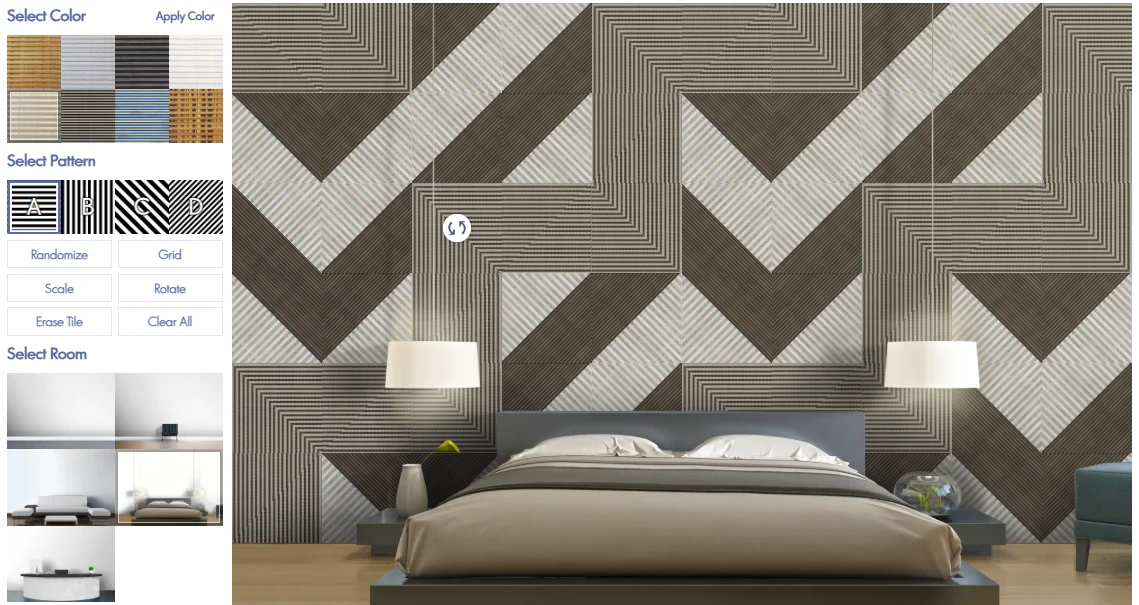
Let Customers Visualize Before They Buy
If you’re selling a highly customizable product—especially something physical, like modular furniture, custom flooring, gallery wall layouts, or design with various fonts and material options—then a tool like this transforms your website from a stiff catalog into a creative playground.
Why show 50 photos of possible panel layouts when someone can create their own in real time?
Not only does it engage visitors longer, but it also makes your sales process smoother.
You get better-informed leads who already know what they want.
And for Plyboo, it also gave them a way to showcase their wide range of design options without overwhelming users with static images.
From a marketing standpoint, it’s gold. People love showing off things they made themselves.
So naturally, Plyboo tied in a design contest, where the winning wall got built and shipped to the designer. That kind of user-generated content builds buzz and trust.
If your product comes in different shapes, colors, or layouts—and if customers ever say, “Can I see what it’ll look like?”- then an interactive design tool could work for you.
Interactive tools like this can help close sales, reduce back-and-forth emails, and even cut down on returns because customers know what they’re getting ahead of time.
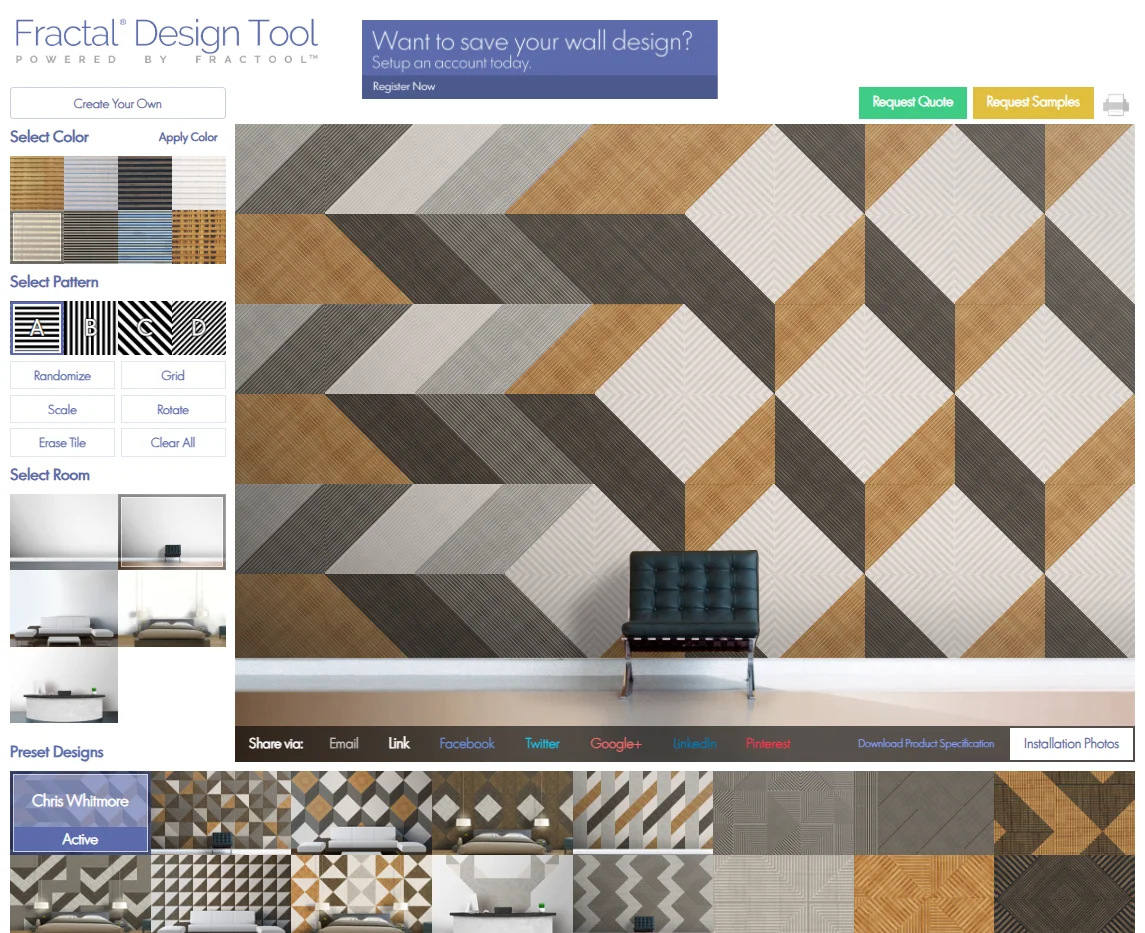
Interactive Design Tools Turn “Maybe” into “Yes”
We believe tools like Plyboo’s interactive wall panel design tool are the future of e-commerce and digital product experiences.
People want to interact and see what they’re actually getting.
An interactive design tool gives buyers the next best thing to experiencing your product in person, allowing them to resolve purchase indecision and feel more confident about their purchase.
If you’re thinking about ways to make your website more engaging—or you’ve got a product that’s hard to show off with pictures alone—we’d love to help.
We’re FDG Web, and we build interactive tools that do more than just look good.
They work hard for your business. They drive sales, solve buyer hesitation, and make your digital experience stand out.
Contact us today to talk about your next design tool vision!